Intersys Partners With Sendmarc to Strengthen Email-Security for UK Organisations

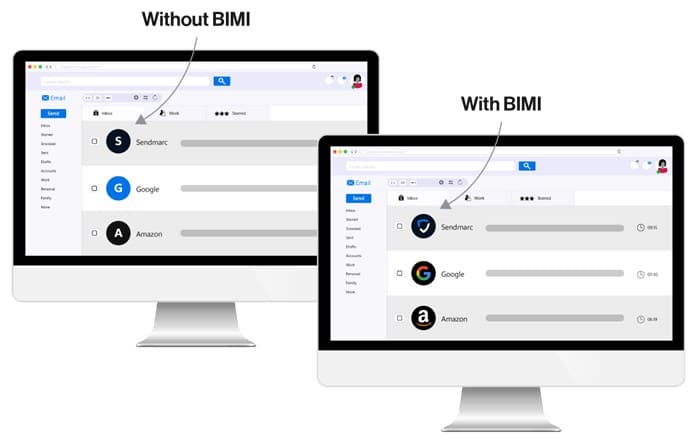
Intersys is proud to announce that we have partnered with email security experts Sendmarc to deliver an advanced DMARC management solution and a DMARC compliance service. Through this collaboration, we are further strengthening our ability to protect our clients from email-based threats.

Cyber threats are increasing in sophistication, with organisations facing increased risks from spoofing, impersonation, and phishing. These attacks can undermine brand trust, expose sensitive data, and lead to reputational damage.

‘We chose Sendmarc because their platform is intuitive and built for proactive defence,’ says Matthew Geyman, Managing Director at Intersys. ‘With Sendmarc’s deep expertise and track record, we are confident we can deliver measurable results, while maintaining the transparent, service-first experience our clients expect.’

Intersys offers Sendmarc’s DMARC solution as part of our Premium and Zero Trust tiers in our Cyber Security as a Service offering.

Sendmarc’s platform supports a wide array of service providers — for example, Rackspace.

Key features of Sendmarc’s platform include:

Strong email authentication is becoming a necessity. Regulators and cyber security frameworks are increasingly emphasising DMARC adoption.

We are committed to delivering industry-leading protection, combining our deep IT and cyber security expertise with advanced partner solutions. This collaboration with Sendmarc reaffirms our promise to provide our clients with best-in-class security, managed transparently, effectively, and proactively.

Ready to evaluate your domain’s email posture? Check your domain for free with Sendmarc’s record checker. We also provide a domain reputation checker tool which can help organisations understand if their domain and IP are under threat from criminals.

Intersys Launches in India to Help Brokers and Insurers Grow Cyber Portfolios by Strengthening Policyholder Resilience

Mumbai, 17 July 2025 – Cyber security and IT services provider Intersys has launched operations in India with a focus on helping re/insurers and brokers grow their cyber insurance business by improving the cyber risk profile of policyholders.

Led by Tanmay Gore, Director of Intersys India, the Mumbai-based office is addressing a key challenge in the market: the difficulty of assessing and pricing cyber risk for organisations that often lack dedicated IT security resources. By offering resalable cyber security services — including baseline cyber risk assessments and continuous cyber monitoring to India’s corporate SMEs — Intersys enables insurers and brokers to offer policies with confidence, backed by data and risk controls.

The core of the proposition is twofold:

This approach helps establish a clear security baseline and creates a feedback loop between cyber hygiene and insurance pricing – a vital step in a market where cyber losses are rising, but risk quantification remains difficult.

Matthew Geyman, Managing Director of Intersys, said: “Intersys clients in the UK are ten times less likely to suffer a cyber attack compared to the national average. Using cyber risk mitigation best practices developed in the UK, we’re launching Intersys India to give local brokers and underwriters the tools they need to support India’s SME corporate policyholders with practical cyber security services that directly improve their insurability. When clients are better protected, they’re a better risk – and that unlocks profitable growth for everyone.”

Dr. Prerna Tambay of Intersys India said, “There is a clear gap in the market to support India’s brokers and insurers in offering proactive cyber risk assessment and management services. Our model is proven in mature markets like the UK, where Intersys has a clear track record of embedding cyber security best practices within the insurance journey. For Indian insurance brokers and carriers, the offering unlocks new business potential among underserved mid-market corporates and supports efforts to increase cyber insurance penetration.”

— —  —  — -ENDS — — — — -

Notes to Editors:

About Intersys

Intersys is a leading global provider of cyber risk management solutions, dedicated to helping organisations of all sizes assess, manage, and mitigate cyber risk. With a team of experienced cyber risk experts and a comprehensive suite of cyber security services, Intersys empowers clients to protect their critical assets and maintain business continuity in the face of evolving cyber threats.

Find out more about Intersys in India.

Media Enquiries

Helen Wright
Lysander PR
[email protected]
+44 7842 729 579

Michelle Worvell
Lysander PR
[email protected]
+44 7810 531 035

Finance and Insurance Experts Urge Sector-Wide Cyber Security Training and Removal of Victim Blame Culture Amid Rising Threats

Intersys-hosted high-level roundtable explored cyber resilience following wave of UK cyber attacks

London, 21 May, 2025:

Experts from the banking, insurance, and law enforcement sectors have called for urgent, organisation-wide cyber security training to bolster resilience across the UK’s financial system. The call follows a wave of recent high-profile cyber attacks — including those affecting major UK retailers which included the theft of customer data — which have once again highlighted the urgency of enhancing cyber defences across all sectors, and breaking down the culture of blaming victims. 

Hosted in person at Intersys’ Leadenhall Market office in the City of London, the exclusive roundtable event — Navigating Cyber Security and Operational Resilience in the Finance and Insurance Sector - welcomed 12 senior representatives from organisations including Metro Bank, Chubb, Aon, and Clear Group, alongside Inspector Charlie Morrison, Head of the Cyber Griffin Programme at the City of London Police. 

According to the UK Government’s Cyber Security Breaches Survey 2025, phishing attacks remain the most prevalent and disruptive form of cyber breach or attack, experienced by 85% of UK businesses and 86% of charities. Despite the scale of the threat, only 30% of UK businesses currently offer cyber security training to staff.

Moreover, among the 3% of businesses that fell victim to cyber-facilitated fraud in the past 12 months, 54% of incidents stemmed from phishing, followed by online bank account hacks (28%) and organisational account takeovers (15%).

Inspector Charlie Morrison, Head of the Cyber Griffin programme at the City of London Police, said:

“Throughout the Square Mile, organisations are often well-prepared to manage the technical impacts of a cyber incident, but less equipped to support the individuals affected. The person who clicks on a malicious link or opens a malicious attachment can often go through a psychological journey similar to a victim of conventional crime, experiencing anxiety, insecurity, and a fear of returning to work. The City of London community has an opportunity here to integrate victim care into our response, and in so doing, limit the significant harm that cyber criminality can have.”


Mark Kirby, Professional Services Director at Intersys, said:

“Demand for this roundtable significantly exceeded capacity, underlining just how concerned and engaged the financial services sector is when it comes to the cyber threat landscape. The latest breaches show that you can have the best technical defences, but one click on a phishing link can still compromise your entire operation. That’s why we need to move beyond just tools and firewalls. User education is the most powerful frontline defence. And at the same time, this isn’t about blaming the victim, it’s about making sure they’re supported and informed. The attacker only has to succeed once, which is why ongoing, organisation-wide cyber training is essential. And we need to go further too — including implementing dark web monitoring and reporting tools, so organisations have a full view of where and how they may be exposed.”

Jake Ives, Head of Security at Intersys, said:

“A major theme from this event was culture; cyber resilience has to become part of a company’s DNA. The key takeaway was clear: organisations must foster environments where people feel confident and supported to report suspicious activity. Too often, fear of blame or embarrassment leads to silence, which gives attackers the advantage. We need to normalise early reporting — to treat clicking a phishing link not as failure, but as an opportunity to respond quickly and learn. Building a security-aware culture also means limiting unnecessary privileges, like removing local admin rights, and adopting technologies like Zero Trust Application Whitelisting. But all of that only works if people are engaged, educated, and empowered to act.”

Industry Leaders Urge Insurance Sector to Tackle Escalating Cyber Threats

LONDON, 18 March 2025 – Leading figures from across the insurance and cyber security sector have issued a unified call to action for insurers to strengthen their cyber resilience in response to the rapidly evolving threat landscape. 

Intersys, a leading provider of cyber security and IT solutions for the insurance sector brought together senior cyber security, underwriting, and risk management professionals to address pressing challenges facing the sector. The panel included:

At a high-level roundtable hosted by cyber security specialists Intersys, industry leaders warned that insurers must move beyond reactive approaches and implement more robust, proactive risk management strategies to counter growing cyber threats:

Urgent need for industry-wide action

Tim King, Business Development Lead, Intersys, said: “Threat actors only need to succeed once, whereas businesses must remain vigilant at all times. The risk-reward balance has shifted, making cyber crime an attractive option for criminals, with the likelihood of getting locked up for armed robbery higher than being arrested for cyber crime. The industry must prioritise proactive security measures to mitigate this risk as rather worryingly, GCHQ says significant numbers in the insurance sector use out-of-date Windows.”

Jake Ives, Head of Security, Intersys, said: “MFA is a strong starting point, but it isn’t foolproof. Cyber criminals are becoming increasingly sophisticated, stealing access tokens and bypassing security protocols. The insurance sector needs to continuously adapt to these threats.”

Douglas Robare, Venture Partner — Neo Ventures, said: “At the event I was introduced to the term Quishing - QR code phishing — which is rapidly rising from 0.8% of phishing attempts in 2022 to 12.4% in 2024. It’s a reminder that while we’re used to spotting phishing emails and texts, fake QR codes are now a real threat. The event was an excellent opportunity to discuss key cyber security challenges, particularly around data management, legacy systems, and the growing risks as AI tools become more prevalent in the insurance industry.”

Aarti Ajay, IT Audit Manager, We Are Just said: “There are so many challenges to overcome, and the discussion nailed some interesting topics and areas of focus for security professionals.”

David Clamp, Founder, The Camelot Network, said: “There were lots of insights on the theory and practical application of how to protect against the evolving cyber threat landscape, right in the heart of the London Market.”

Lisa Rowe, Senior Underwriter — Financial Lines, Cyber, Specialty MGA UK, said: “The Cyber Roundtable hosted by Intersys was a great opportunity to connect and share insights. Intersys’ deep expertise in cyber security made the collaboration enriching, and I truly valued the chance to meet with my fellow professionals.”

Robin Muir, Head of Contingent Risks, Devonshire Underwriting, said: “Cyber security must be embedded in the DNA of every insurance business — from MGAs to insurers and brokers. As the industry becomes increasingly interconnected through data feeds and APIs, the risk landscape is evolving at an unprecedented pace. Proactive, robust cyber measures are critical to protecting sensitive data and maintaining operational resilience. The insurance sector must stay ahead of emerging threats by fostering continuous dialogue and collaboration with cyber security experts, ensuring that best practices evolve alongside the risks we face.”  

Mark Kirby, Professional Services Director, Intersys said: “Our goal is to bring together IT security experts, risk managers, underwriters, and auditors to foster knowledge-sharing and innovative problem-solving in the face of emerging cyber threats.”

Notes to Editors

About Intersys

Intersys is a leading global provider of cyber risk management solutions, dedicated to helping organisations of all sizes assess, manage, and mitigate cyber risk. With a team of experienced cyber risk experts and a comprehensive suite of services, Intersys empowers clients to protect their critical assets and maintain business continuity in the face of evolving cyber threats.

For further details on Intersys and future roundtable events, visit: https://intersys.co.uk/events/

Media Enquiries

Helen Wright
Lysander PR
[email protected]
+44 7842 729 579

Michelle Worvell
Lysander PR
[email protected]
+44 7810 531 035

In-App Browser Security Risks: What Every Business Should Know

You’re scrolling through Facebook or Instagram when a news article catches your eye. You click on it, and it opens right there in the app — quick, seamless, no need to switch to your browser. 

Convenient, right? Maybe — maybe not. In-app browsers might make browsing easier, but they’re a big security risk — the digital equivalent of walking through a sketchy neighbourhood with your wallet hanging out. Every time you enter login credentials or payment information in these embedded browsers, you’re essentially handing your data to the app developer on a silver platter. 

While this doesn’t mean every app is out to exploit your information, businesses need to be aware of the potential vulnerabilities.

What exactly are in-app browsers?

Simply put, they’re mini web browsers built directly into apps like Facebook, Instagram, TikTok, and LinkedIn. Instead of opening a link in Chrome, Safari, or Edge, the app keeps you inside its own ecosystem. This might seem like a small difference, but it gives the app more control over what you see — and what data it can collect.

The hidden dangers of in-app browsers

Unlike traditional browsers, these in-app versions give the app more control over what you see and do, which can include tracking your activity or even capturing sensitive data. So, what is happening in the shadows? Let’s take a look.

Tracking without limits

Think of in-app browsers as a one-way mirror — the companies can see everything you do, but you can’t see what they’re up to. Unlike your regular browser where you can add security tools and tweak privacy settings to your heart’s content, these in-app versions play by their own rules. They can slip in tracking code that watches every move you make online — every tap, every swipe, every click. Sure, companies say all this tracking helps make things better for you, but they’re collecting a lot more data than most people realise.

Keystroke logging and data capture

Perhaps most concerning is the ability to record everything you type. In 2022, former Google engineer and developer Felix Krause revealed that TikTok’s iOS app could record every keystroke made on websites viewed through its in-app browser. We covered that story in depth, along with advice on how to protect your business data. TikTok swears they never actually spied on anyone’s keystrokes, but just knowing they built that capability in the first place? That’s more than a little unsettling for anyone who cares about privacy.

Security vulnerabilities

In-app browsers are basically like driving a car with no airbags or seatbelts. While regular browsers warn you about sketchy websites and potential scams, these stripped-down versions leave you totally exposed. That makes it easier for cyber criminals to trick you with fake login pages, or even worse, silently intercept your data as it travels across the internet.

A compromised user experience

In-app browsers aren’t just a privacy headache — they’re also a pain to actually use. They’re clunkier and slower than regular browsers, and they don’t play nice with the tools we’ve all come to rely on. 

Have you ever clicked a link on Instagram only to face yet another login screen for a website you’re already subscribed to? That’s because your trusty password manager is basically locked out of the party. 

And good luck trying to find that interesting article you were reading earlier — once you close the app, it vanishes into thin air. While Chrome and Safari keep track of your digital breadcrumbs, letting you retrace your steps whenever you need to, in-app browsers are more like a maze with no map. 

There’s no history, no reopening closed tabs, no picking up where you left off. It’s like starting from scratch every single time.

Lack of transparency

Finally, when you use an in-app browser you’re basically browsing in the dark. With Chrome or Safari, you’re in the driver’s seat — you can check security settings, wipe your cookies, or add privacy tools whenever you want. 

But in-app browsers? They keep you in the dark about what they’re tracking, where they’re sending your data, or how long they’re keeping it. 

Intersys’ Managing Director Matthew Geyman advises against their use completely.  “If you want real control over your privacy, I recommend skipping the in-app browser and using your device’s native browser instead. Not only is it more secure, but it keeps social media companies from building an even more detailed profile of your online life – whether for targeted ads or something more invasive.”

Platform specific risks

iPhone: A false sense of security?

Apple prides itself on user privacy, but in-app browsers on iPhones still come with risks. While Apple mandates that all apps use Safari’s browser engine, this doesn’t mean complete protection. 

Even App Tracking Transparency (ATT) — Apple’s widely publicised privacy feature — can’t fully stop apps from monitoring your activity within their built-in browsers. Released in 2021, ATT requires apps to ask for permission before tracking users across different apps and websites. 

However, this doesn’t apply to tracking within an app’s own browser. Popular platforms like Facebook and Instagram can still monitor user interactions — what you click, type, or even hover over — because the tracking happens inside the app itself, bypassing ATT’s restrictions. While ATT is a step in the right direction for data privacy, it doesn’t eliminate the hidden risks of in-app browsers.

Android: In-app browser security risks run deeper

Android phones face even greater in-app browser security risks. Unlike Apple, Android lets apps create their own browser systems or use different technologies to display web pages. 

This freedom comes with drawbacks — some in-app browsers might miss important security updates or use less secure systems. Android also gives apps more freedom to access different parts of your phone, which could let them track more of your data or even install unwanted software. 

While you can change your browser settings on Android, most people don’t, because they’re unaware of the risks in the first place.

What the social media companies are saying

In-app browsers have been lurking around since 2008, but they flew under the radar for years. That all changed in 2019 when Google engineer Thomas Steiner blew the whistle on Facebook’s use of these browsers in their mobile apps. Suddenly, people started paying attention to what this meant for their privacy and freedom of choice. 

Then in August 2022, developer Felix Krause dropped a bombshell blog post revealing how Instagram and Facebook could track everything you do on websites opened within their apps. A week later, he discovered TikTok injecting code that could record every single keystroke users made.

TikTok says they’ve never used their keylogging abilities, and Meta and Google insist their in-app browsers are totally innocent. But here’s the thing — these companies don’t have the best track record with privacy, and the fact remains that they’ve built themselves a perfect little spying toolkit, whether they’re using it or not.

“Social media companies claim their in-app browsers protect you from threats and improve your experience,” says Matthew. “While there’s a grain of truth there, they conveniently leave out how it lets them track every website you visit and everything you do online. The real question is: do you trust these companies with that kind of power?”

How businesses can protect themselves

Businesses can’t afford to ignore in-app browser security risks, but there are ways to reduce the risks. Four steps you should strongly consider to guard against in-app browser threats:

  1.  Encouraging employees to open links in external browsers — such as Chrome, Safari, or Edge — should be the first step. Many apps offer an option to “Open in Browser,” though it’s often hidden in menus.
  2. Businesses should also consider Mobile Device Management (MDM) solutions, which allow IT teams to enforce security policies, blocking the use of in-app browsers on company devices.
  3. For organisations that handle sensitive financial or legal data, enterprise-grade secure browsers — like Microsoft Edge for Business — can provide better protection.
  4.  Finally, regular cyber security training is crucial. Employees should be aware of how in-app browsers work, why they pose risks, and how to spot potential security threats before they become a serious problem.

The convenience of in-app browsers comes at a price that many of us aren’t aware we’re paying. While it might seem harmless to quickly check that news article or shopping site within your social media app, you’re potentially exposing your personal data to unnecessary risks. The good news is that the solution is simple: take the extra second to open links in your device’s native browser.

For businesses, the stakes are even higher. With remote work and mobile devices now integral to daily operations, every click in an in-app browser could be exposing sensitive company data. By implementing clear policies about browser usage and ensuring proper training, organisations can significantly reduce their exposure to these hidden risks.

Remember: if something seems too convenient in the digital world, it’s worth asking yourself what you might be giving up in return. When it comes to in-app browsers, that small moment of convenience could lead to significant privacy and security compromises.

Intersys is a specialist cyber security provider offering everything from full cyber security as a service to one-off rapid breach response to organisations under threat. To find out more, talk to an Intersys cyber security expert now.
Fibre Optic Attack Sparks Reflection on Resilience in London’s Insurance Market

The recent internet outage in London’s insurance market, caused by a deliberate attack on fibre optic cables, has drawn attention to an often-overlooked vulnerability in the industry’s infrastructure. However, it appears the impact was not as significant as the protestors might have hoped. This is likely because robust internet communication infrastructure is inherently designed to be resilient to such attacks.

Matthew Geyman, Managing Director of Intersys, shared his observations with leading news sites such as The Guardian, Commercial Risk, Insurance Edge and Insurance Times

“We noticed a significant slowdown of internet speed in the City of London at the time it happened, which suggested high contention (i.e., some communications links were becoming saturated, or stretched, as they took excess load from the damaged lines). Beyond this, I’ve heard of very little disruption. This either speaks highly of the preparedness of the organisations involved and their BCPs or means they’re excellent at remaining tight-lipped.”

Reflecting on the broader lessons learned from the incident, Matthew highlighted the importance of viewing operational resilience holistically:

“The recent internet outage affecting London’s insurance market highlights a critical vulnerability in the industry’s infrastructure. While the immediate cause — a deliberate attack on fibre optic cables — was an unconventional physical threat, it serves as a reminder that operational resilience must address both physical and cyber risks holistically.

Most organisations have invested heavily in refining their Business Continuity (BCP) and Disaster Recovery (DR) plans, especially following the pandemic. By 2025, even highly coordinated attacks like this should encounter multiple layers of redundancy — ranging from alternative fibre routes to wireless and radio link backups — designed to limit the impact of severed connections.

In today’s digital-first landscape, continuity plans must also account for workforce flexibility. With remote access technologies and the ongoing digitisation of the London Market, many employees can seamlessly shift operations from one location to another, ensuring minimal disruption.

Ultimately, resilience is not just about recovering from incidents; it’s about proactively embedding robust systems and processes to minimise vulnerabilities and maintain business continuity. Insurers, as leaders in risk management, must demonstrate this ethos — ensuring they are prepared for both the risks we can predict and those we cannot.”

This incident underscores the need for the insurance market to build on its digital transformation efforts with equal emphasis on resilience. 

It’s clear that climate activists are zeroing in on the insurance sector in particular and that they are embracing newer methods of disruption since the introduction of tougher anti protest legislation in the UK. 

As Matthew notes, the industry must remain vigilant and proactive, ensuring its infrastructure and workforce are equipped to withstand both expected and unforeseen threats.

Intersys helps Ebix navigate a complex Azure Infrastructure Deployment

Ebix Europe Ltd are a leading insurance software provider to the London and global markets. Their specialist insurance software products and services have been a major driver of digitisation in the insurance industry and Ebix’s Placing Platform was critical for electronic placing and the London Market’s underwriting operations during the pandemic.

The Challenge

Ebix were looking at a comprehensive migration of their platforms and servers to an Azure cloud environment. Their many successful solutions included a new digital placing system — PlacingHub and an exposure management platform — ExposureHub.

It was vital to ensure that the migration and hosting were carried out methodically and securely and that the entire process conformed to industry best practices.

Ebix were keen to partner with security-focused Azure specialists who could provide the necessary skillset for such a technical project.

Our Solution

Intersys has been providing specialist IT support to the insurance sector since the mid-1990s. In fact, our MD Matthew Geyman began his career at a London Market underwriting firm. Our team of Azure experts is well-versed in all aspects of virtualisation and PaaS (Platform as a Service) such as SQL Managed Instances, as well as managing large-scale infrastructure upgrades.

Our Cloud Computing team was able to seamlessly augment Ebix’s in-house staff to help steer this project. We used a scrupulously planned methodology and process to guide the migration. We were able to bring the authority, formal knowledge, and experience that was necessary for such a specialist task. This approach also helped the client comply with regulations applicable to the finance sector.

After a successful migration, the project was handed over to our skilled managed services team who manage the day-to-day running of the project. This systematic and formalised approach has been key to keeping their infrastructure secure, reliable and fast-running.

Testimonial

Peter Smyth, Vice President, Ebix Europe

“Intersys have been a trusted partner throughout our digital transformation projects. They helped drive an essential infrastructure migration to the Azure Cloud environment and enabled us to ensure that our platforms and servers were consistent, secure and aligned with best practices.”

See more IT and cyber security case studies.

Find out about our IT and cyber security services for the (re)insurance sector.

Intersys Expands in UK Insurance Market, Launching New Office to Deliver Critical Cyber Managed Services

London, 8 October, 2024 – Intersys, the leading UK-based provider of cyber risk management solutions, dedicated to helping organisations of all sizes assess, manage, and mitigate cyber risk, today announced its further expansion in the UK insurance market.

Intersys has opened a new cyber security and IT office in Leadenhall Market, the heart of the insurance district. Intersys’ new London office will serve as a hub for delivering cutting-edge cyber managed services tailored to the unique needs of the UK insurance sector. The company’s experienced team of cyber security experts will work closely with clients to develop and implement customised solutions that address the evolving cyber threat landscape.

Intersys: Decades of experience in insurance

Intersys boasts nearly three decades of experience in the insurance industry and as a leading London IT company. The company’s leadership team includes experienced insurance and technology experts who work with leading insurance businesses to provide IT infrastructure, security, outsourced solutions and cloud infrastructure design and support for critical firms within the market. This includes support for placing platforms, underwriting, claims management and exposure management systems. They also provide outsourced IT for fintech firms that are critical suppliers to large insurers.

“Insurers understand risk better than most, yet they themselves are prime targets for cyber attacks,” said Matthew Geyman, Managing Director at Intersys. “The alarming statistic that 50% of UK businesses have suffered breaches underscores the urgent need for proactive risk management in the cyber domain. Intersys’ proven track record in significantly reducing cyber breaches for our clients demonstrates the effectiveness of our approach. We’re not just another tech company; we’re a trusted partner with a deep understanding of the insurance industry’s unique challenges.”

“Our understanding of the insurance world, combined with our long-standing ISO 27001 certification and our laser focus on security, positions us uniquely to support insurers,” said Catherine Geyman, Director of Enterprise Risk Management at Intersys

“As the industry faces an expanding array of cyber threats, it’s crucial for insurers to adopt a holistic approach to risk management. By integrating cyber risk into broader enterprise risk strategies, we help our clients not only protect their operations but also build the resilience needed to navigate emerging challenges. With technology rapidly transforming the industry, it’s essential to have partners who understand where you’re starting from and where you’re headed. We look forward to expanding our support for the insurance sector with the opening of our new London hub.”

— —  —  — -ENDS — — — — -

Notes to Editors

Photo caption:

L‑R bottom

Catherine Geyman, Director of Enterprise Risk Management
Mark Kirby, Executive Director
Richard Geyman, Technical Director Matthew Geyman, Managing Director

L‑R top

Malcolm Alexander, Non-Executive Director
Bart Patrick, Consultant 

About Intersys

Intersys is a leading global provider of cyber risk management solutions, dedicated to helping organisations of all sizes assess, manage, and mitigate cyber risk. With a team of experienced cyber risk experts and a comprehensive suite of services, Intersys empowers clients to protect their critical assets and maintain business continuity in the face of evolving cyber threats.

www.intersys.co.uk

Media Enquiries

Helen Wright

Lysander PR

[email protected]

+44 7842 729 579

Michelle Worvell

Lysander PR

[email protected]